
American vs. British Working Lines of Labrador Retrievers
Twenty-nine years of experience offer a practical look at how two field-trial traditions shaped different working styles—and how to choose the right fit.
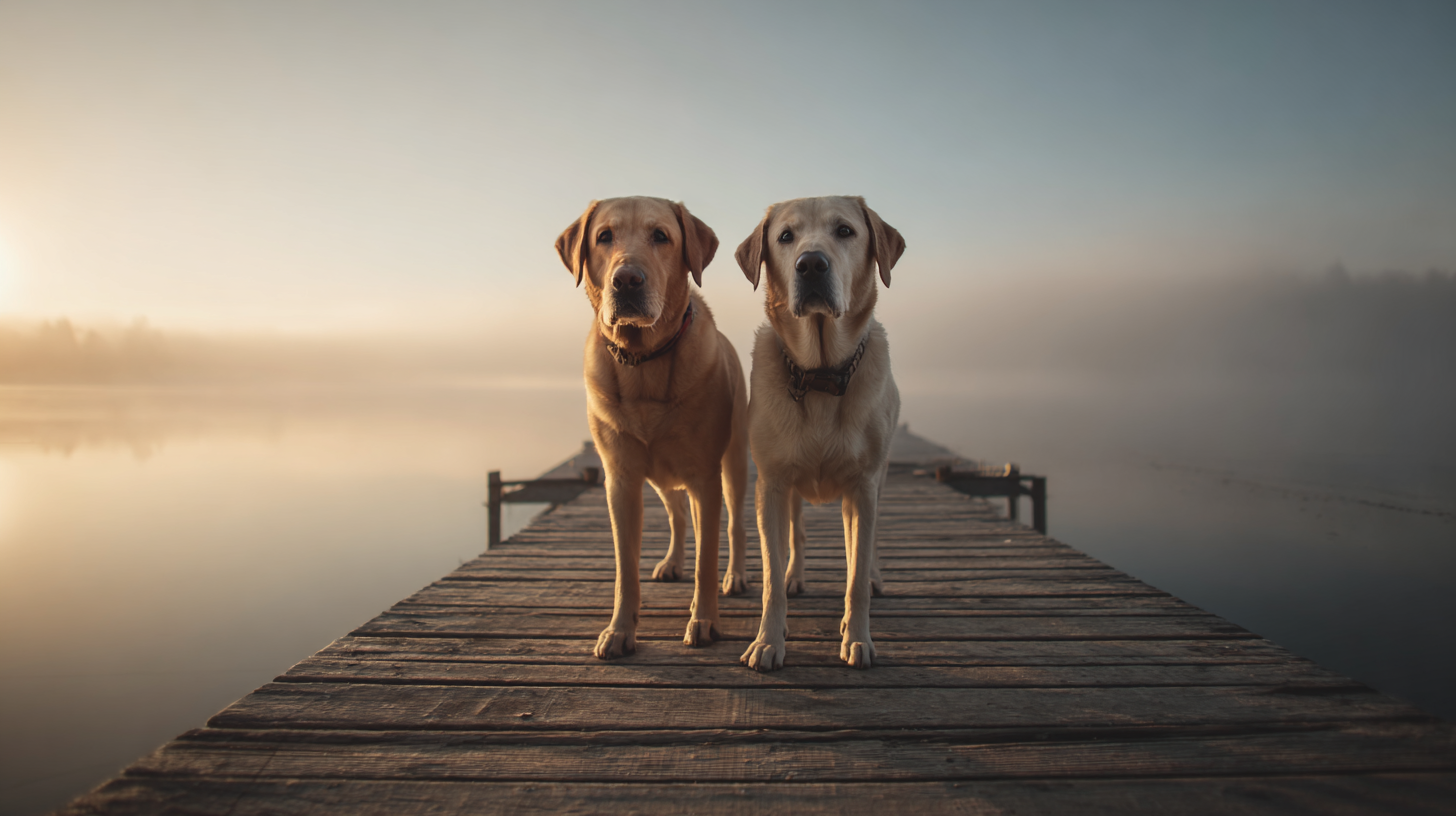
American versus British working lines is a subject that has been discussed over and over. What follows is what I’ve learned through twenty-nine years of experience with Labrador Retrievers.
My first retriever was American bred, and I bought it when I was roughly eighteen. I went to Tom Hamilton of Bracken Fen Gundogs for help with training. Tom was a retired United States Air Force veteran who had been stationed in England, learned their training styles and techniques, and brought dogs back to America when he retired.
Experience on both sides of the Atlantic
In my early days, I was an avid duck hunter. Over time, I began training dogs for local friends and eventually opened Ace’s Gundog Kennels. I’ve since trained American-bred Labradors for duck hunting, blood trailing, dead-dog work, and basic and advanced obedience.
I began importing dogs roughly twenty years ago and started traveling to the UK. I’ve now been there between twenty and twenty-five times, and those trips are never just vacations. I go to watch dogs train, meet handlers, evaluate dogs, attend events, and learn as much as possible about their dogs, techniques, and training history.
Some American field-trial dogs are exceptional animals, and some UK field-trial dogs are exceptional animals. Both have been selectively bred for generations to do a particular job, and those traits are visible in each line.
The goal behind British working lines
A serious UK field-trial trainer has one ultimate goal: to win the International Gundog League Championship. The dog must be extremely cooperative, quiet, steady, responsive to the whistle, capable of running straight lines, and willing to take every hand cast. Those qualities help a dog progress from novice to open competition, earn championship status, and potentially qualify for the IGL Championship.
UK field trials are rooted heavily in tradition. Although standards have tightened and the game has become more complicated, the training still carries much of its original foundation. You can see that influence in Labrador Retrievers from UK field-trial lines today.
Trainers thoughtfully set dogs up to succeed and generally work toward two outcomes: the dog should have fun, and the dog should do what the handler asks—nothing more and nothing less. Too much self-directed decision-making can make advancement in that trial system difficult.
Managing independence and hunt drive
Independence is a natural canine trait. Some dogs are passive and look for a pack leader; others want to lead. The UK system has not eliminated that trait through breeding. Instead, it manages it by developing calm, collected dogs and teaching them to hunt where and when the handler directs.
Many UK trainers prefer an easy-going dog they can build gradually. They may steer away from a dog that strongly wants to use its nose and hunt independently—a quality we often call hunt drive in America. In their system, the dog should go where directed, stop on the whistle, and hunt an area on command.
A highly energetic, independent dog that is extremely confident in its own ability may not fit the UK field-trial world well. A dog that works enthusiastically while remaining comfortable under the handler’s guidance often excels there.
How American working lines developed
American retriever trials began in the 1930s and were initially based heavily on UK trials. Over the years, however, the distances, complexity, and expectations increased drastically. Training methods changed with them. Force-fetch techniques became increasingly common by the late 1960s and early 1970s, and the dogs needed to be bold enough to handle substantial pressure.
The American approach built natural retrieve drive to a very high level from puppyhood, producing confident, powerful, high-energy dogs. Trainers could then sculpt that large foundation of drive into the performance they wanted. The UK approach was more like building the sculpture one careful piece at a time.
Those American dogs were selectively developed to withstand the demanding training that has defined the country’s field-trial world for more than fifty years.
Two different games shaped two different dogs
Each side took a different approach because it pursued a different end goal. The British system needed a calm, cooperative dog performing retrieves rooted in the country’s hunting tradition. The American system pushed distances and complications far beyond what most real hunts demand, requiring a bolder, stronger, more powerful dog.
Neither line is inherently better. Each has been selectively bred to excel at a certain type of field trial. An American dog can compete in a British event, and a British dog can compete in an American event, but each line’s history tends to make it naturally suited to its original game.
Choose the dog for the life you actually live
One of the biggest issues I’ve seen through raising, training, handling, importing, and hunting dogs around the world is the belief that every American family needs a highly bred American field-trial dog simply to retrieve ducks.
Hunting season is closed for most of the year, and during that time the dog also needs to live as a calm family companion. Many American-bred Labradors can do both, but the more intensely they are bred for top-level field trials, the more some may struggle to be laid-back in an ordinary household.
In my experience, the highest-bred American field-trial dog is built for a game most families will never play. The best choice is not the line with the biggest reputation—it is the dog whose temperament, energy, and working style fit your actual goals.
Keep learning in the field.
Back to all resources