
Why UK Labradors Make Great Duck Dogs and Family Dogs
Nearly 30 years of training American and UK Labradors have shown me why the UK dog’s steady nature, soft mouth, natural game-finding ability, and off switch can make it an exceptional partner in the blind and at home.
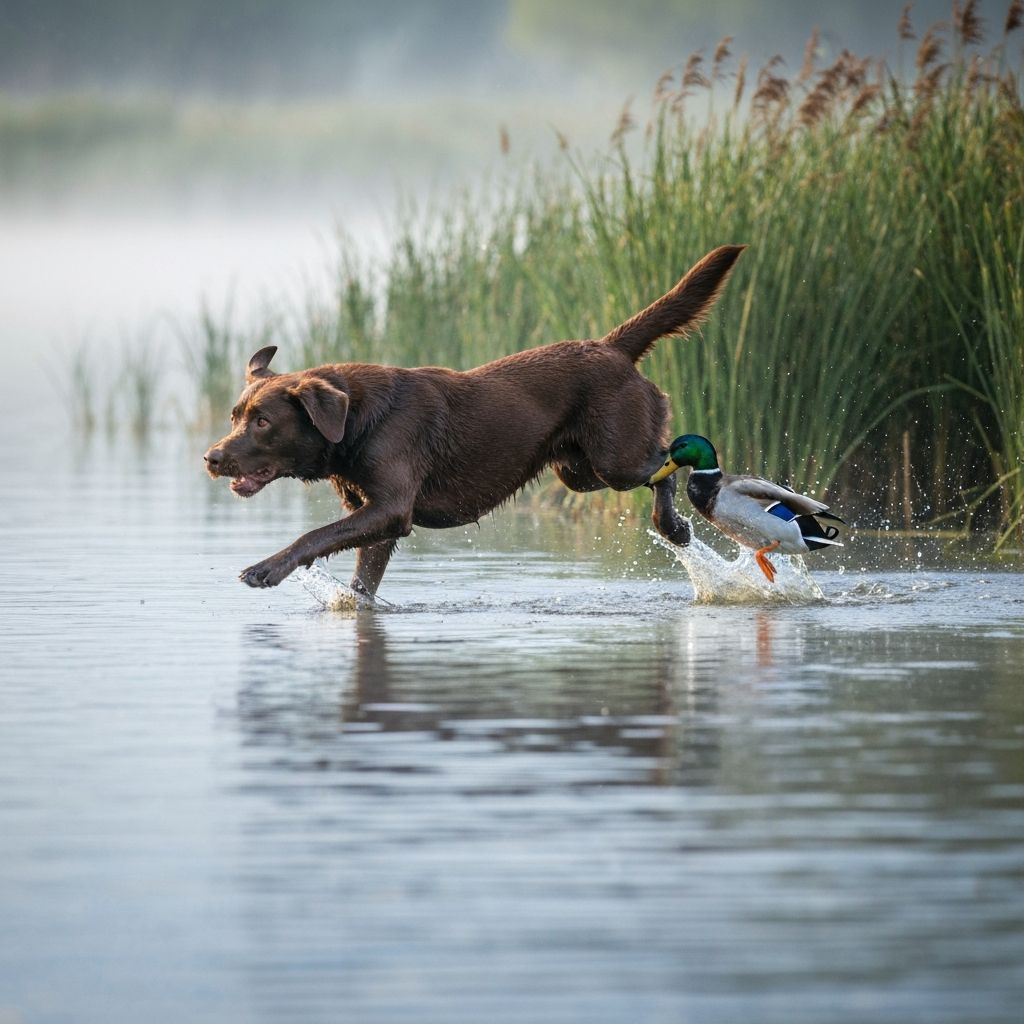
After almost thirty years of training American and UK Labradors, I’ve come to appreciate several traits that make UK working lines especially appealing to people who want one dog to share both the duck blind and the family home.
American and UK Labradors can both be outstanding dogs. They have simply been shaped by different field-trial traditions. Those traditions influence the temperament, working style, size, and training approach a dog may bring to everyday life. For many hunters and families, the qualities commonly found in UK lines create a particularly useful balance.
A calm, steady demeanor
UK field trials place a high value on steadiness and patience. A dog must remain composed while other dogs work and wait quietly until it is sent. Generations of selecting for that standard have helped produce Labradors known for a calm, collected demeanor.
That steadiness matters far beyond competition. In a duck blind, it gives a hunter a dog that can settle between flights instead of constantly burning energy. At home during the long off-season, the same quality often appears as the ability to relax with the family—a true off switch when there is no work to do.
A soft mouth built into the standard
A soft mouth is another trait closely associated with UK working lines. In their field-trial system, a bird must be delivered to hand in good condition. A dog that damages game can be removed from the trial, so careful delivery has been reinforced through selection for generations.
For a waterfowl hunter, that means the natural retrieve is not only about reaching the bird. The full job includes picking it up properly, returning promptly, and delivering it cleanly to the handler.
Natural game-finding ability
UK trials also reward a dog’s ability to find game. Straight lines and precise handling still matter, but the dog must be willing to use its nose, work the wind, and solve the final part of a retrieve when a bird is difficult to locate.
That can be valuable in real hunting conditions. Birds do not always fall where the hunter thinks they did. A Labrador that understands how to move to the downwind side, trust its nose, and hunt productive cover can recover game that might otherwise be lost.
A useful size in the boat and the house
UK working lines tend to be smaller and more compact than many American field dogs. Size may seem secondary until you spend a season sharing a small boat, pit, or crowded blind with a retriever.
A compact dog takes up less room, moves efficiently through rough cover, and is easier to manage around hunting gear. That same practical size can make daily life simpler in the truck and around the house—and, as any longtime dog owner knows, a smaller athlete generally eats less than a much larger one.
A cooperative approach to training
UK dogs have been selectively bred to work in partnership with a handler. Once they understand what is being asked, many are eager to cooperate and repeat the job. That willingness can make training feel smooth and conversational rather than like a constant contest of wills.
Traditional UK programs generally develop retrieving and delivery without relying on the same force-fetch structure common in American retriever training. That does not mean every UK dog is easy or every American dog is headstrong. Individual temperament always matters. But for owners who value a naturally cooperative training style, UK lines often offer the qualities they are looking for.
One dog for hunting season and the off-season
The traits that stand out most are the ones that serve the dog all year: a compact build, a strong nose, a soft mouth, a willingness to work, an eagerness to cooperate, and the ability to settle when the work is over.
Those qualities do not make UK Labradors the only good choice, and bloodline alone never guarantees the right dog. Breeding, health, individual temperament, early development, and training all matter. But for someone looking for a duck dog that can work hard during the season and live calmly with the family the rest of the year, a well-bred UK Labrador deserves serious consideration.
Keep learning in the field.
Back to all resources